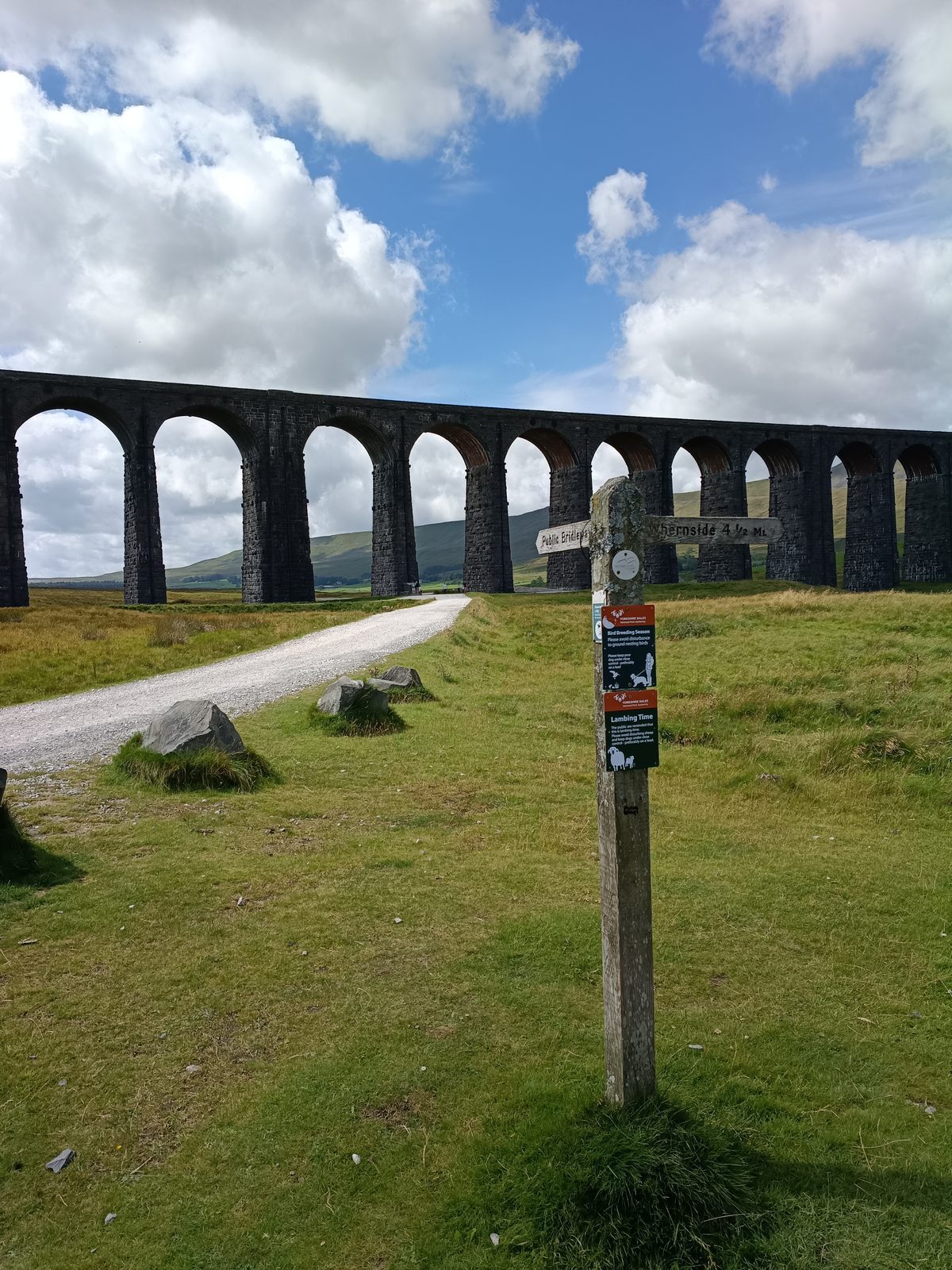
The Yorkshire Three Peaks is about 24 miles, three big climbs and a long day on your feet. It is a real challenge, but it is a walk, not a race, and plenty of ordinary walkers train for it and finish. This guide explains what the day asks of you, how long to train, what to practise each week, and how to build up safely, whatever your age or starting point.
Gear in this guide
Quick picks, with what each is best for. Links go to Amazon UK; as an Amazon Associate I earn from qualifying purchases, at no extra cost to you. Full reviews are on the gear page.
| Product | Best for | |
|---|---|---|
| Scarpa Terra GTX | Best all-round boot for UK hillwalking | View on Amazon |
| Merrell Moab 3 Mid GTX | Best value mid boot | View on Amazon |
| Bridgedale Hike Midweight Merino Comfort | Best everyday walking socks | View on Amazon |
| Rab Downpour Plus 2.0 | Best value waterproof | View on Amazon |
| Black Diamond Trail | Best tough, mid-priced poles | View on Amazon |
| Petzl Actik Core | Best all-round head torch | View on Amazon |
What you are training for
The Three Peaks challenge is to walk a circular route over Pen-y-ghent, Whernside and Ingleborough and finish in under 12 hours. The route is usually given as about 24 miles with roughly 1,585 m of ascent, although sources differ a little (some give 24.5 miles and 1,500 m). The peaks stand at about 694 m, 736 m and 723 m.
The usual start and finish is Horton-in-Ribblesdale, with Ribblehead and Chapel-le-Dale on the way round. It is not one steep climb. It is steady effort for many hours, over rough paths, bog and rock, which is what you need to prepare for. Our Yorkshire Three Peaks route guide has checkpoint times and a free GPX.
How long to train
The Three Peaks Challenge organiser suggests an 8 to 12 week plan for beginners, with at least one long hill day four to six weeks before the event. Another guide suggests starting four to six months ahead if you are building from a low level. As a rule, the less you walk now, the earlier you should start.
If you already walk regularly, 8 weeks can be enough. If you are starting from very little activity, give yourself longer and build slowly.
The four things to train
1. Time on your feet
This matters most. You need to be comfortable walking for many hours. Gym work helps but does not replace walking outdoors, so build up a weekend long walk each week, adding time or distance gradually.
2. Hills and climbing
Seek out hills near you. Beginners should start with shorter routes and add distance and height each week, rather than jumping straight to a big mountain. Practise going down as well as up, because long descents are hard on the knees.
3. Back-to-back days
Walking on two days in a row teaches your legs to keep going when tired. A long walk on Saturday followed by a shorter one on Sunday is a good habit.
4. Strength, balance and mobility
Strong legs, hips and core make long days easier and protect your joints. Simple exercises at home, such as squats, lunges, step-ups and calf raises, are a good place to start, with balance work such as standing on one leg. Gentle mobility work keeps your hips and ankles moving well.
An example training week
This is a simple example to show the idea. Adjust it to your fitness and your week, and do not copy it blindly.
- Monday: rest or gentle stretching.
- Tuesday: 30 to 45 minutes of brisk walking, with some hills if you can.
- Wednesday: 20 to 30 minutes of strength and balance exercises.
- Thursday: an easy walk, or rest.
- Friday: rest, or short mobility session.
- Saturday: your long hill walk, building up over the weeks.
- Sunday: a shorter walk on tired legs.
For the long walk, Yorkshire Cancer Research's 2026 challenge guide starts with a 6 to 8 mile walk on mixed terrain plus strength exercises. Build from where you are, adding a little each week. Include at least one long hill day four to six weeks before the event, as the organiser suggests, so you know how your body copes with a big day.
Building up safely at any age
People of all ages and fitness levels take on the Three Peaks. Whatever your starting point, these principles apply:
- Build slowly. Add a little each week and give yourself rest days. Rushing the build-up is the quickest way to pick up an injury.
- Include strength and balance. UK guidelines recommend strength-building activity on at least two days a week, alongside at least 150 minutes of moderate activity, and balance and flexibility work becomes more important with age. Check the current NHS advice for your age group.
- Look after your knees on descents. Short steps, a steady pace and trekking poles can help take load off your legs.
- Talk to your GP first if you have a health condition, take medication that affects exercise, or have not been active for a long time.
The 8-week hillwalking training plan
Mark created the 8-week hillwalking training plan (Get Fell-Ready) to help people he knew get ready for challenges like the Three Peaks, and for hill and mountain walking in general. It is an 8-week training plan with progressive training, built around hiking goals, covering cardio, strength and mobility. It needs no gym and no equipment.
It works for any age and any starting point. If you want a week-by-week structure to follow, rather than building your own, it is there for that.
8-Week Hillwalking Training Plan (Get Fell-Ready)
Progressive training built around your hiking goals. Cardio, strength and mobility. No gym needed. Works for any age and any starting point.
£19.99 · instant PDF download
Get the training plan →Prefer to do it with a guide?
Mark leads guided walks, including the Yorkshire Three Peaks, and can help you prepare and get round on the day.
"The whole day was incredibly well planned. Mark thought of everything and made sure everyone in the group was looked after. A truly memorable experience." Alison, Yorkshire 3 Peaks
Kit to train in
Train in the kit you will wear on the day, so nothing surprises you at mile 18.
- Boots. Break them in on your long walks. The Scarpa Terra GTX was named best overall boot in a UK test, and the Merrell Moab 3 Mid GTX is a lighter, lower-cost option.
- Socks. Cushioned merino-blend socks such as the Bridgedale Hike Midweight Merino Comfort. Carry a spare pair.
- Waterproof. The Rab Downpour Plus 2.0 is a good-value jacket for changeable Yorkshire weather.
- Head torch. Useful if the day runs long. See the Petzl Actik Core.
Our what to wear guide covers layers, and our safety guide covers what else to carry. Take a map and compass too, because the section between Whernside and Ingleborough can be boggy and the waymarks hard to follow in poor visibility.
On the day
- Start slower than feels natural. Pen-y-ghent is the first and smallest peak, and the energy in your legs early on is tempting. Save it for later.
- Keep a steady rhythm and use short, repeatable stops rather than long breaks.
- Eat and drink little and often, before you feel hungry or thirsty.
- Use checkpoint times to see whether you are on track. If you are well behind at Ribblehead, make a plan.
- Have a bail-out plan. Know where you can leave the route if the weather turns or you are struggling.
- Many plans ease off in the final week, with short, gentle walks, so you start the day fresh.
Quick answers
How long should I train for the Yorkshire Three Peaks?
The Three Peaks Challenge organiser suggests an 8 to 12 week plan for beginners, with at least one long hill day four to six weeks out. If you are starting from low fitness, allow longer.
How fit do I need to be?
You need to be able to walk for many hours, with 24 miles and about 1,585 m of climbing. Most people prepare by building up long walks, hills, and some strength work.
Can I do the Three Peaks as a beginner?
Yes, with enough time to prepare. Build up gradually, include strength and balance work, allow time to recover, and talk to your GP first if you have any health concerns.
Do I need a gym?
No. Walking outdoors matters most, and strength exercises can be done at home with no equipment.
Please note. This guide is general information and not medical advice. If you have a health condition, or have not been active for a long time, talk to your GP before starting a training programme. Conditions on the hills change quickly, so always check the mountain weather forecast. Gear links go to Amazon UK; as an Amazon Associate I earn from qualifying purchases, at no extra cost to you.
Sources
- Three Peaks Challenge: Three Peaks for beginners
- Three Peaks Challenge: the route
- Charity Challenge: Yorkshire 3 Peaks
- Yorkshire Cancer Research: Y3P challenge guide 2026
- Think Adventure: how long does it take to climb each peak
Get the free Three Peaks GPX
Join the list and we will email you the free Yorkshire Three Peaks GPX route, plus new guides as they are published.
No spam. Unsubscribe any time.